Situation Report | PDF Document
Document Overview:
| Analyst | Bahauddin Foizee |
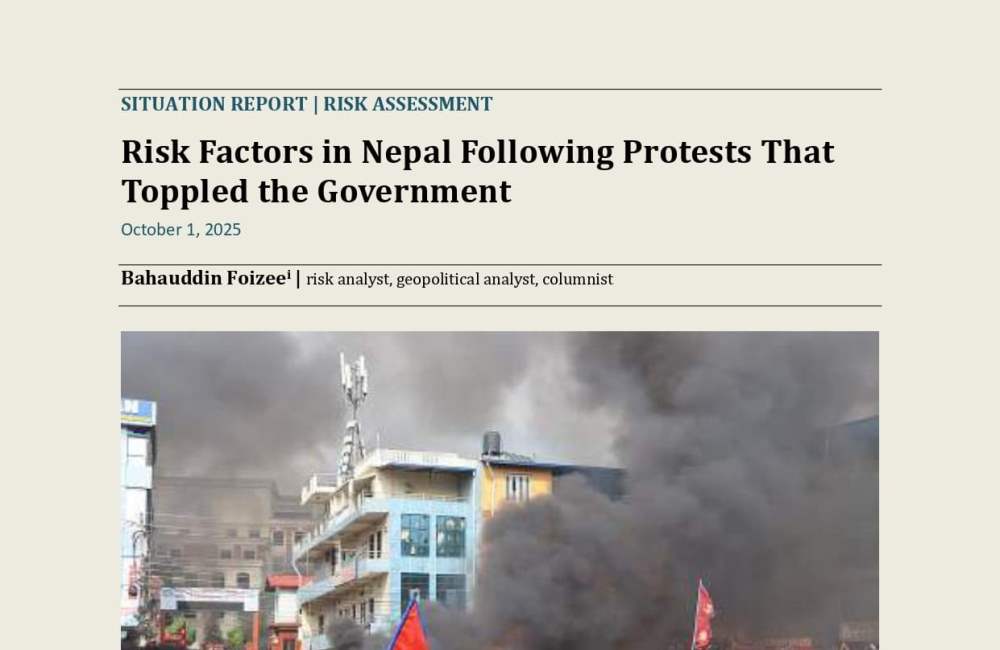
Nepal’s post–September 2025 landscape reflects a fragile pause rather than a resolution. The recent protests, popularly addressed as “Gen Z” protests, triggered initially by the social media ban but rooted in deeper grievances around corruption, inequality and exclusion, exposed a profound disconnect between the political establishment and a younger generation demanding accountability.
Although the resignation of Prime Minister K. P. Sharma Oli and the appointment of an interim government under Sushila Karki marked a significant political shift, these steps have so far failed to dissipate public anger. The scale of violence, loss of life and destruction of state institutions has left lasting scars and underscores the depth of the crisis of governance.
The interim government’s task is further complicated by an unstable security environment and limited public confidence in political institutions. Despite the lifting of the social media ban and the inclusion of multiple political factions in the transitional administration, dissatisfaction remains widespread, particularly among urban youth who view reform efforts as slow and symbolic.
The continued possibility of curfews, sudden restrictions and clashes between protesters and security forces highlights the tenuous nature of order, with daily life in major cities remaining vulnerable to disruption.
As Nepal moves closer to the March 2026 general elections, the political transition is likely to intensify rather than calm existing tensions. Youth activism is expected to play a decisive role, shaping both the electoral discourse and the broader direction of governance reform. Without meaningful action to address corruption, economic disparity and political exclusion, further unrest remains a credible risk.
For foreign nationals, humanitarian actors and external stakeholders, the evolving situation demands sustained vigilance. Travel advisories, legal restrictions on protest participation and the risk of sudden deterioration in security conditions reinforce the need for caution and flexibility.
Overall, Nepal stands at a critical juncture, where the success or failure of the interim government’s response will significantly influence both the credibility of the 2026 elections and the country’s longer-term political stability.




 Bahauddin Foizee