| Analyst | Bahauddin Foizee |
Relations between the United States and Malaysia stand as a multifaceted and dynamic partnership shaped by over a century of commercial and diplomatic ties, shared security interests, deep economic integration and educational and cultural exchanges. Established officially in 1957 following Malayan independence, the U.S.-Malaysia relationship has grown in complexity and resilience, evolving through historical alliances, trade relations and recent geopolitical challenges.
Historical Foundations: From 19th Century Commerce to Modern Diplomacy
The roots of U.S.-Malaysia ties predate the formation of modern Malaysia. U.S. consular and commercial engagement in Malaya and Borneo began in the 1800s, with American traders such as Joseph William Torrey and Thomas Bradley Harris venturing into northern Borneo to establish the American Trading Company of Borneo. In 1850, the U.S. recognized the independent Kingdom of Sarawak, established by James Brooke, signaling early American interest in the region.
Formal diplomatic relations were solidified following Malaya’s independence in 1957. U.S. consular posts had already been established in George Town (1918), Kuala Lumpur (1948) and, later, Kuching (1968), laying a foundation for robust diplomatic engagement. American support for Malaysia during the Indonesia–Malaysia confrontation in the 1960s marked the beginning of direct U.S. involvement in Malaysia’s political affairs and signaled early alignment on security and stability in Southeast Asia.
Economic Ties: From Tin and Rubber to Electronics and Energy
The economic relationship has been a cornerstone of bilateral ties. Historically, Malaya was the world’s largest producer of tin and rubber—two commodities heavily demanded by the U.S. industrial sector. By 1917, the U.S. was absorbing 77% of Malaya’s rubber exports, driven largely by the burgeoning American automobile industry.
In modern times, the U.S. is one of the largest foreign investors in Malaysia, particularly in the electronics, energy and manufacturing sectors. Major American firms such as Intel, Texas Instruments and Western Digital played pioneering roles in developing Malaysia’s electronics industry in the 1970s. The cumulative value of U.S. investment in Malaysia’s manufacturing sector stands at around $15 billion, with nearly 200,000 Malaysians employed by U.S. firms.
Oil and gas giants like ExxonMobil, ConocoPhillips and Murphy Oil have also poured billions into Malaysian energy projects. Meanwhile, American consumer brands dominate Malaysia’s retail and fast-food landscape, signaling deep cultural and economic entwinement.
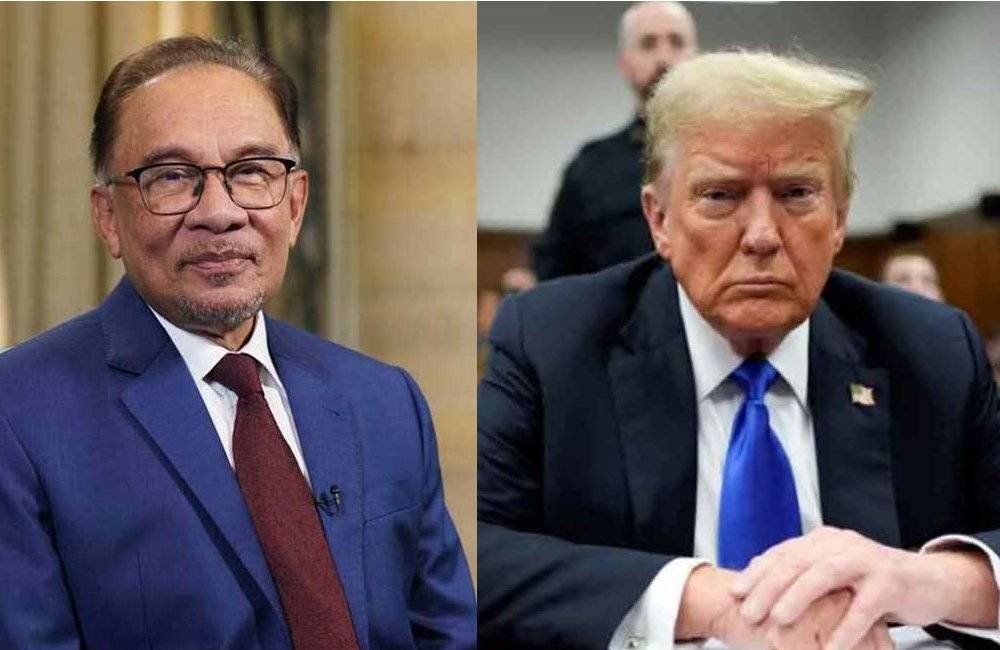
However, tensions have occasionally flared. In April 2025, the Trump administration imposed a 24% tariff on Malaysian exports as part of broader “Liberation Day” tariffs. In response, Malaysian Prime Minister Anwar Ibrahim emphasized ASEAN unity and economic resilience, signaling a strategic pivot toward regional solutions in the face of unilateral U.S. trade actions.
Strategic and Security Cooperation: Building Mutual Trust
Despite Malaysia not being a formal U.S. treaty ally, the two nations enjoy robust security cooperation. The U.S. has provided military assistance and training through the International Military Education and Training (IMET) program, and Malaysia has purchased American weapons systems, including the McDonnell Douglas F/A-18D fighter jets and MD 530G helicopters.
A defining moment in military collaboration came during the 1993 Battle of Mogadishu when Malaysian troops helped rescue surrounded U.S. rangers. Since then, joint military exercises such as Cooperation Afloat Readiness and Training (CARAT) and participation in the Global Peace Operations Initiative have solidified strategic trust.
The Southeast Asia Regional Centre for Counter-Terrorism (SEARCCT), established in Kuala Lumpur in 2003, remains a key platform for U.S.-Malaysia cooperation against global terrorism and extremism. Recent naval engagements, such as U.S. carrier visits and aerial refueling exercises with Malaysian Sukhoi Su-30MKM aircraft in 2024, underscore the growing interoperability between the two militaries.
Educational and Cultural Linkages
Educational exchanges have become a pillar of people-to-people diplomacy. The Fulbright English Teaching Assistant program has enriched language education across Malaysia, and around 6,000 Malaysians are alumni of U.S. Department of State exchange programs. President Obama’s 2014 Young Southeast Asian Leaders Initiative (YSEALI) expanded opportunities for youth engagement, reinforcing America’s long-term soft power in the region.
Cultural preservation also features in U.S.-Malaysia ties. Since 2001, the Ambassadors Fund for Cultural Preservation has supported numerous projects to safeguard Malaysia’s diverse heritage, showcasing mutual respect for cultural diplomacy.
Diplomatic Engagement and Political Dynamics
High-level visits have punctuated the bilateral relationship. President Obama’s 2014 visit marked the first by a U.S. president since 1966, symbolizing a new era of engagement. The elevation of the partnership to “Comprehensive” status during Obama’s Pivot to Asia strategy brought enhanced cooperation in trade, education, science and environmental issues.
This momentum continued under President Trump, whose administration, despite its transactional approach to diplomacy, maintained friendly ties with Prime Minister Najib Razak. The two leaders were publicly seen playing golf in Hawaii in 2014, a gesture of personal camaraderie.
Prime Minister Anwar Ibrahim’s 2023 visit to the United States affirmed continued engagement despite shifting global tides. Malaysian officials have emphasized balancing ties with major powers, recognizing the U.S. as a strategic partner while advocating for multipolar diplomacy.
Disagreements and Diplomatic Strains
While the overall relationship has been strong, political tensions have emerged, particularly around U.S. foreign policy in the Muslim world. Malaysia has historically criticized American interventions in Iraq and Palestine. Under Mahathir Mohamad’s leadership, Malaysia was vocally opposed to the U.S.-led invasion of Iraq. Yet, even during these periods of diplomatic strain, economic relations remained steady.
The 2023 Israel-Hamas war reignited Malaysian criticisms of U.S. foreign policy. Prime Minister Anwar Ibrahim reiterated Malaysia’s support for Palestinian statehood and condemned all forms of terrorism, including actions by Hamas. Malaysia rejected unilateral U.S. sanctions under the Hamas International Financing Prevention Act, with 84% of Malaysians disapproving of President Biden’s handling of the Gaza conflict, according to a 2024 Pew poll.
Moreover, U.S. sanctions in 2023 against Malaysian companies allegedly aiding Iranian drone production and subsequent allegations of illegal oil transfers, have added tension. Malaysia has firmly stated it does not recognize unilateral sanctions not endorsed by the United Nations, underscoring a commitment to sovereign foreign policy decision-making.
Outlook: Resilient Ties Amid Global Shifts
Despite occasional diplomatic and policy divergences, the U.S.-Malaysia relationship remains resilient, anchored in mutual economic interests, strategic alignment as well as robust educational and cultural exchange. The Comprehensive Partnership, while occasionally tested by shifting administrations and global events, reflects the broad consensus within both countries on the value of sustained engagement. As Malaysia navigates an increasingly multipolar Asia, and the U.S. continues to recalibrate its presence in the Indo-Pacific, the future of bilateral ties will depend on mutual respect, pragmatic cooperation and shared values. In a world facing unprecedented geopolitical challenges—from climate change and cyber threats to shifting trade paradigms—the Malaysia-U.S. partnership stands as a dynamic model of adaptable, multi-dimensional diplomacy.




 Bahauddin Foizee