| Analyst | Bahauddin Foizee |
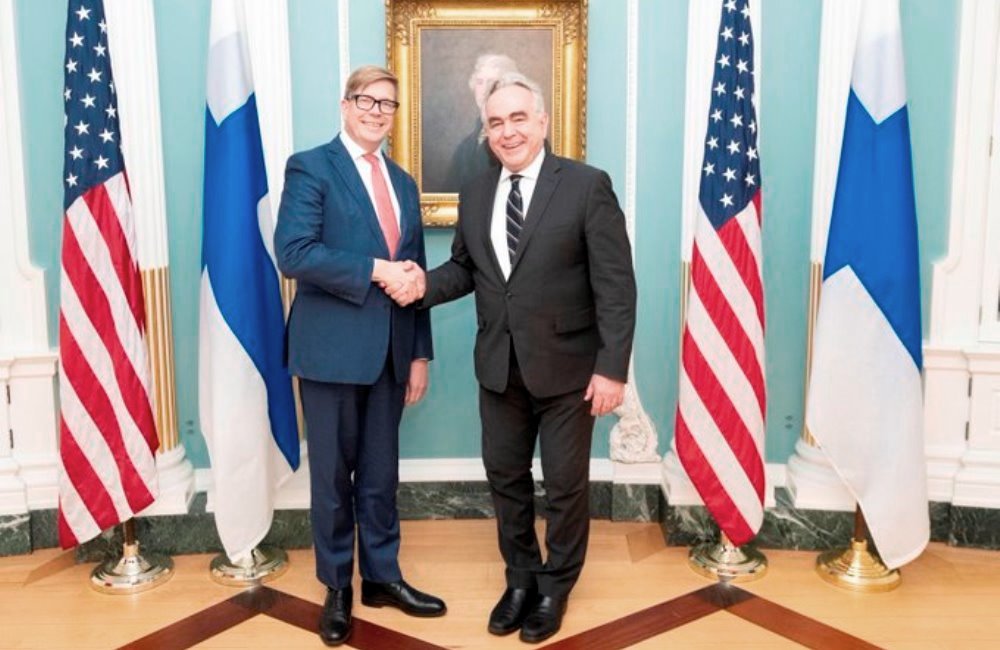
A significant dialogue took place on October 11 in Washington, D.C., between the United States and Finland, focusing on the increasingly complex dynamics of the Indo-Pacific region. Co-chaired by Deputy Secretary of State Kurt Campbell and Finnish State Secretary for Foreign Affairs Jukka Salovaara, the meeting underscored a pivotal moment in international relations, as two nations with a shared commitment to democracy and security convened to tackle pressing global challenges.
The discussions were framed around a vision for a “free and open Indo-Pacific,” a concept that has gained traction among allies as they respond to an assertive China and shifting geopolitical balances. The emphasis on upholding international law and freedom of navigation—particularly in contentious areas like the South China Sea—signals a robust commitment to countering any unilateral actions that threaten regional stability. With tensions around Taiwan also highlighted, it is clear that both nations view the Indo-Pacific not just as a distant concern, but as integral to their national security strategies.
One of the most striking aspects of the dialogue was the frank acknowledgment of the interconnectedness of contemporary security threats. The leaders expressed alarm over China’s growing support for Russia’s military capabilities, alongside an unsettling military collaboration between Russia and North Korea. This triad of nations presents a complex challenge, necessitating a unified response from Western allies. The commitment to enhance ties among NATO members and strengthen cooperation with Indo-Pacific partners underscores the understanding that security in one region can heavily influence stability in another.
Moreover, the conversation highlighted Finland’s integration into NATO and its ongoing support for Ukraine, reinforcing the idea that European security and Indo-Pacific stability are intertwined. As Finland navigates its new role within NATO, its insights could be invaluable in shaping a collective approach to emerging threats. This integration represents a broader strategic shift, as NATO increasingly acknowledges the need for a transatlantic focus that extends beyond Europe.
The dialogue also addressed economic resilience in the region, particularly through technology partnerships. As nations grapple with supply chain vulnerabilities exposed by recent global events, the commitment to bolster economic ties is both timely and critical. The push for technological collaboration reflects an understanding that economic strength is a cornerstone of national security.
However, amid these discussions of strategic cooperation, the leaders did not lose sight of other global hotspots. Their call for immediate de-escalation in the Middle East illustrates a comprehensive approach to international diplomacy—one that acknowledges that security challenges are not isolated but rather part of a larger mosaic of global relations.
In conclusion, the U.S.-Finland dialogue represents a proactive step toward addressing the multifaceted security challenges of our time. By reinforcing alliances, enhancing military and economic cooperation, and committing to a rules-based international order, both nations are positioning themselves to better navigate an uncertain future. As the global landscape continues to evolve, such dialogues will be crucial in ensuring that democratic values and international stability are upheld in the face of rising authoritarianism.




 Bahauddin Foizee