| Analyst | Bahauddin Foizee |
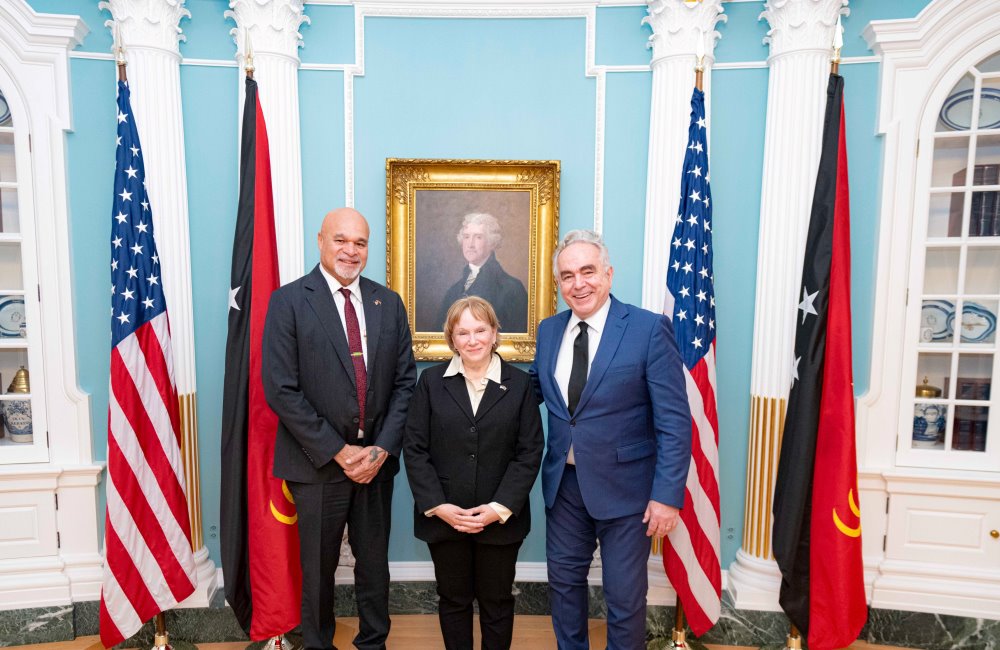
A pivotal moment unfolded on October 10, 2024, in Washington, D.C., as U.S. Deputy Secretary of State Kurt Campbell met with Papua New Guinea’s Deputy Prime Minister John Rosso for the inaugural United States–Papua New Guinea Strategic Partnership Dialogue. This historic meeting is more than just a diplomatic formality; it represents a significant evolution in the bilateral relationship, built on a foundation of shared values and mutual respect.
The dialogue highlights a strategic shift towards deeper collaboration, particularly in areas of security, climate change, and economic cooperation. With the backdrop of a rapidly changing global landscape, the discussions aim to align both nations on pressing issues that affect not only their immediate interests but also the broader stability of the Indo-Pacific region.
The partnership is rooted in commitments established during earlier exchanges this year, emphasizing a continuous dialogue that seeks to modernize security ties. The U.S. Strategy to Prevent Conflict and Promote Stability, launched in 2022, along with a recently finalized Defense Cooperation Agreement, suggests a concerted effort to bolster defense and enhance cooperation in safeguarding a free and open Indo-Pacific. This is particularly vital as regional dynamics evolve, with many eyes on the geopolitical tensions that characterize this critical area.
Moreover, the commitment to addressing climate change cannot be overstated. Both nations are poised to lead by example in global efforts to combat environmental challenges. The urgency to cut greenhouse gas emissions and halt deforestation resonates deeply in the Pacific, where the impacts of climate change are acutely felt. Their collective call for major economies to submit 2035 national contributions aligned with the Paris Agreement reflects a responsible and forward-thinking approach, emphasizing that collaboration is essential in tackling a crisis that knows no borders.
Economically, the dialogue opens doors for enhanced trade and investment opportunities. The potential of an Open Skies agreement indicates a commitment to fostering greater connectivity, which could invigorate tourism and bolster trade between the two nations. Papua New Guinea’s governance over its mineral resources will also be crucial, as the U.S. supports initiatives that improve energy access—a critical need that has already seen positive outcomes for over 255,000 households.
Cultural exchanges are a testament to the enduring ties that both nations seek to cultivate. Initiatives promoting people-to-people connections, professional collaborations, and Sister City partnerships will serve to enrich the relationship on a grassroots level, fostering understanding and appreciation between diverse communities.
Looking ahead, the next Strategic Partnership Dialogue is set for 2025 in Port Moresby, coinciding with Papua New Guinea’s 50th independence anniversary. This forward-looking approach not only marks a celebration of past achievements but also a commitment to an enduring partnership. As both nations reaffirm their dedication to these annual consultations, it’s clear that the future holds promise—a promise of strengthened ties that can lead to a more secure, prosperous, and resilient Indo-Pacific region.
In a world where geopolitical alliances are constantly in flux, this partnership stands as a beacon of cooperation and shared purpose, embodying the spirit of collaboration that is essential for facing the challenges of the 21st century.




 Bahauddin Foizee