|Analyst|Simi Garewal|
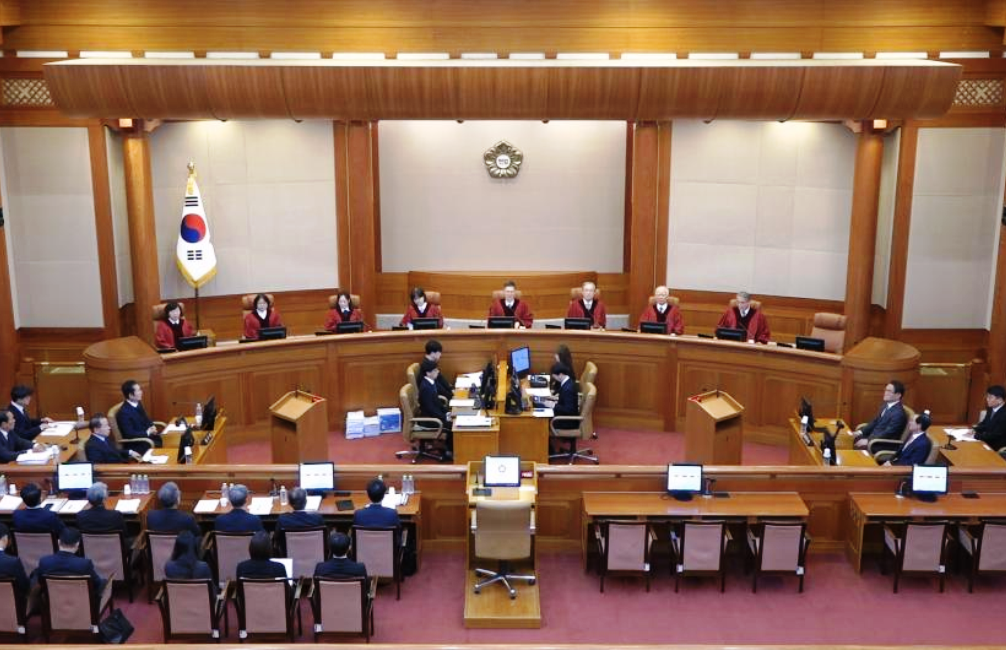
South Korea’s recent Constitutional Court ruling on climate policy marks a seismic shift in the intersection of law, environmental justice, and generational rights—not just domestically, but across Asia. By declaring that the country’s current climate measures fall short in protecting the constitutional rights of its citizens, particularly the youth, the court has taken a bold step where politics has faltered. This ruling elevates climate inaction from a policy shortcoming to a constitutional violation, asserting that the right to a healthy and pleasant environment is not aspirational—it is enforceable.
The court’s directive to the National Assembly to establish annual carbon reduction targets between 2031 and 2049 by early 2026 is a powerful, if overdue, demand for accountability. It compels lawmakers to shift from lofty rhetoric to legislative action. Yet this judicial nudge arrives in a context riddled with inertia. Despite enacting the Framework Act on Carbon Neutrality and Green Growth in 2021, South Korea remains one of the laggards in the OECD, with a mere 9 percent of its electricity sourced from renewables as of 2023. The gap between commitment and execution is stark—and growing.
The fact that this legal breakthrough was driven by 255 plaintiffs, many of them minors at the time, is a sobering reminder of who has the most at stake. These young litigants represent a generation that has grown up not only amid climate anxiety but also amid governmental lethargy. Their victory is emblematic of a broader, global movement where youth are increasingly forced to take their governments to court just to secure a livable future. This is not merely activism—it is survival.
Still, one ruling cannot overcome years of political stalling and policy gaps on its own. Even now, carbon reduction bills, including a proposed carbon tax that could significantly slash emissions, languish in legislative limbo. Political will remains the missing ingredient. President Yoon Suk-yeol and the National Assembly now face a critical test: will they rise to the urgency of the court’s mandate, or allow procedural drift and partisan squabbling to dilute its impact? The Ministry of Environment’s stated support is encouraging, but the sincerity of that support will be measured by what comes next—specifically, whether new laws with real teeth are enacted and enforced.
More than just a national reckoning, this ruling could become a blueprint for judicial climate activism across Asia. In a region where democratic institutions are uneven and environmental regulations are often weak or unenforced, South Korea’s experience could serve as a catalyst. If constitutional courts elsewhere begin to treat climate inaction as a rights violation, it could alter the political calculus in countries long resistant to aggressive environmental policy.
But precedent alone is not progress. What South Korea has now is a window—a chance to redeem its environmental commitments, to align its domestic policies with international agreements like the Paris Accord, and to demonstrate that a democratic society can, when pressed, recalibrate its priorities in the face of existential threats. Whether this opportunity becomes a turning point or a missed moment depends on the political courage of its leaders and the persistence of its people.
Ultimately, the Constitutional Court has delivered more than a ruling; it has delivered a challenge. Climate action is no longer just a matter of politics—it is a matter of constitutional justice. The world will be watching not only to see if South Korea complies with this judgment, but whether it seizes this moment to lead. If it does, this decision could resonate far beyond Seoul, echoing through courtrooms and parliaments across Asia and igniting the momentum needed to confront one of humanity’s greatest challenges.




 Bahauddin Foizee