|Analyst|Nicholas Lovric|
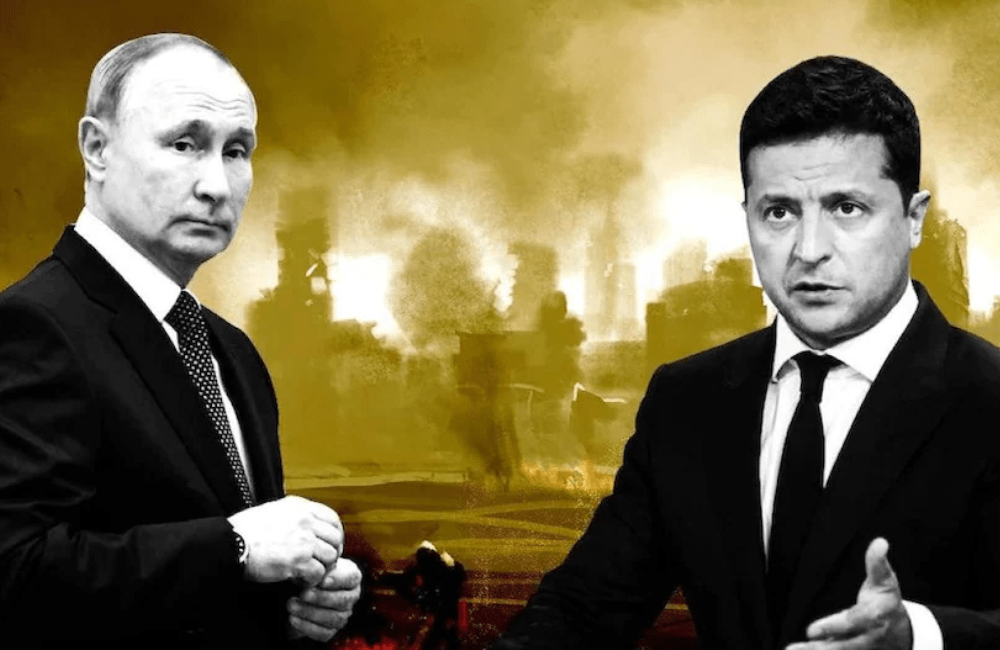
Vladimir Putin’s full-scale invasion of Ukraine in February 2022 was pitched to the Russian public and the world as a necessary action to secure Russia’s safety, dignity, and existence. But beneath this narrative lies a broader and more cynical political calculus—one that has not only failed on its own terms but also severely undermined Russia’s position on the global stage. Far from achieving his strategic goals, Putin’s war has catalyzed exactly the opposite of what he intended: it has invigorated NATO, galvanized Ukrainian national identity, and exposed the limits of Russian military power.
Putin’s stated objectives—“demilitarization,” “de-Nazification,” and the protection of Russian-speaking populations in eastern Ukraine—were cloaked in historical distortions and unfounded claims. The phrase “de-Nazification” was swiftly unmasked as a euphemism for dismantling Ukrainian statehood. A state-run Russian opinion piece even admitted as much, equating de-Nazification with “de-Ukrainization.” The notion of genocide committed by Ukraine against its own citizens was unsupported by any evidence, and instead, it is Russian forces that have been accused by international organizations of committing war crimes and atrocities.
At the core of Putin’s strategy was the intent to neutralize Ukraine and prevent it from moving closer to NATO and the European Union. The plan was brazen: capture Kyiv, eliminate Ukraine’s leadership, and install a puppet regime to pave the way for eventual annexation. But Ukraine didn’t collapse. Instead, the Ukrainian people mounted a fierce resistance—military and civilian alike—turning what was intended to be a swift takeover into a prolonged and bloody conflict.
Facing setbacks and a dramatic failure to seize Kyiv, Russia was forced to recalibrate its goals. The Kremlin repositioned the invasion as an operation to “liberate” Donbas, focusing on areas where it had already exerted influence since 2014. This retreat from the original ambition of regime change to a narrower territorial goal was not a strategic recalibration—it was a glaring admission of failure. The Russian military’s inability to sustain momentum revealed deep flaws in its planning, morale, and logistics.
Ironically, Putin’s war—launched to keep NATO at bay—has accomplished the reverse. Countries long known for their neutrality, namely Finland and Sweden, interpreted Russia’s aggression not as a show of strength but as a warning of their own vulnerability. The sight of Ukraine standing up to Russia sent a clear message: resistance is possible, and alliances matter. Thus, instead of deterring NATO expansion, Putin’s actions have prompted it, with Finland and Sweden taking serious steps to join the alliance. As NATO Secretary General Jens Stoltenberg bluntly observed, Putin wanted less NATO at Russia’s borders; instead, he now faces more.
The invasion has therefore become a case study in geopolitical miscalculation. Putin has succeeded not in intimidating Europe, but in unifying it. He has not driven a wedge through NATO, but has instead given it renewed purpose. The European security architecture, once plagued by uncertainty and fragmentation, has found new cohesion in the face of Russian aggression. In short, Putin’s attempt to reshape Europe by force has only reinforced the very institutions he sought to undermine.
This war has revealed the paradox of authoritarian power: while it can compel and coerce, it cannot manufacture legitimacy, resilience, or loyalty. Ukraine’s spirited defense has underscored that sovereignty cannot be easily erased, even under the weight of bombs. And as Russia’s initial triumphalist narratives crumble under the weight of battlefield realities and international backlash, the world sees not a resurgent empire, but a reckless gamble gone wrong.
In trying to subjugate Ukraine, Putin has inadvertently strengthened its sense of nationhood. In attempting to isolate the West, he has driven it closer together. And in seeking to intimidate Russia’s neighbors, he has pushed them into the arms of the very alliance he so deeply fears. History will not remember this war as a display of Russian might, but as a self-inflicted wound—a war of choice that brought about consequences its architect could neither control nor foresee.




 Bahauddin Foizee