| Analyst | Bahauddin Foizee |
Singapore, a small yet affluent city-state, is widely recognized as a major financial hub in Asia. While this image of wealth dominates the global perception of the country, Singapore’s military, particularly its navy, plays a crucial role in ensuring regional security.
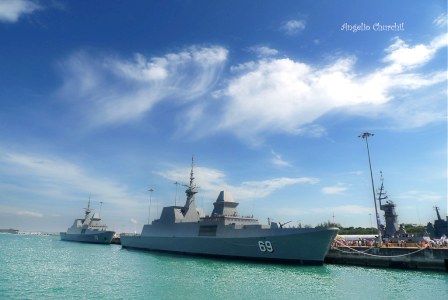
The Republic of Singapore Navy (RSN) is a key player in safeguarding the maritime routes of Southeast Asia, often conducting joint patrols with other regional navies to counter threats such as piracy. Over the years, the RSN has evolved into a sophisticated and highly trained force, earning recognition as one of the top five naval powers in Asia, according to The National Interest.
Strategic Naval Expansion
Singapore’s naval ambitions are driven by both its security concerns and its economic interests. Given its small size and proximity to larger neighbours like Malaysia, Singapore aims to build a navy capable of defending its territory while also being a formidable partner in regional defense alliances.
In the face of potential threats from a rising Chinese navy, Singapore envisions a naval force that can integrate effectively with other regional and extra-regional powers, including Australia, India, Indonesia, and Japan.
To achieve this, Singapore is heavily investing in modernizing its naval assets. A major focus of this effort is the renewal of its submarine fleet, with the acquisition of four German-built Type 218SG submarines. These new submarines are significantly more advanced than their predecessors, offering enhanced operational capabilities and the ability to remain submerged for longer periods—up to 50% longer than previous models.
Submarines, which specialize in both offensive strikes and surveillance, will bolster Singapore’s ability to project power and gather intelligence, even in the waters off foreign shores. The new submarines could also be upgraded in the future to carry long-range missiles, increasing their offensive capabilities.
In addition to submarines, Singapore is expanding its surface fleet with the construction of new Joint Multi-Mission Ships (JMMSs). These vessels, with a length of 540 feet and a displacement of around 14,500 tons, will feature a full-length flight deck and the capacity to carry several helicopters. In the future, these ships may also support fixed-wing aircraft, such as the F-35B fighter jets that Singapore plans to acquire from the United States. These versatile ships could function as a form of aircraft carrier, enhancing Singapore’s ability to project air power and extend its reach across the region.
Furthermore, the RSN is focusing on incorporating unmanned technologies into its fleet. Drones and unmanned vessels equipped with surveillance cameras and weapon systems will provide enhanced operational flexibility and allow Singapore’s warships to respond more quickly to emerging threats. To accommodate these innovations, Singapore plans to procure new vessels, including Littoral Mission Vessels (LMVs), Multi-Role Combat Vessels (MRCVs), and JMMSs, all of which will be equipped to deploy unmanned air and surface vehicles.
Wealth and Strategic Investment
Singapore’s wealth plays a critical role in supporting its ambitious defense plans. As a global financial hub with a small landmass, Singapore enjoys the leverage of allocating fewer resources to infrastructure and other conventional sectors. This allows the government to channel a larger share of its budget into advanced technologies and defense procurement.
In fact, Singapore has consistently been the largest military spender in Southeast Asia, with its defense budget reaching US$11.4 billion in 2019, or about 19% of total government spending and 3.3% of its GDP. This level of investment allows Singapore to maintain a cutting-edge military, capable of defending its interests and contributing to regional security.
In summary, while Singapore may be best known for its wealth and economic prowess, its military ambitions reflect a strategic vision focused on enhancing its security through advanced technology and international collaboration. By modernizing its naval capabilities and investing in both traditional and unmanned platforms, Singapore is positioning itself as a formidable maritime power in the region, ensuring its ability to safeguard its interests and contribute to collective security in the Asia-Pacific.




 Bahauddin Foizee